Contents
Creamy Baby Oatmeal Bowl 🥣🌾
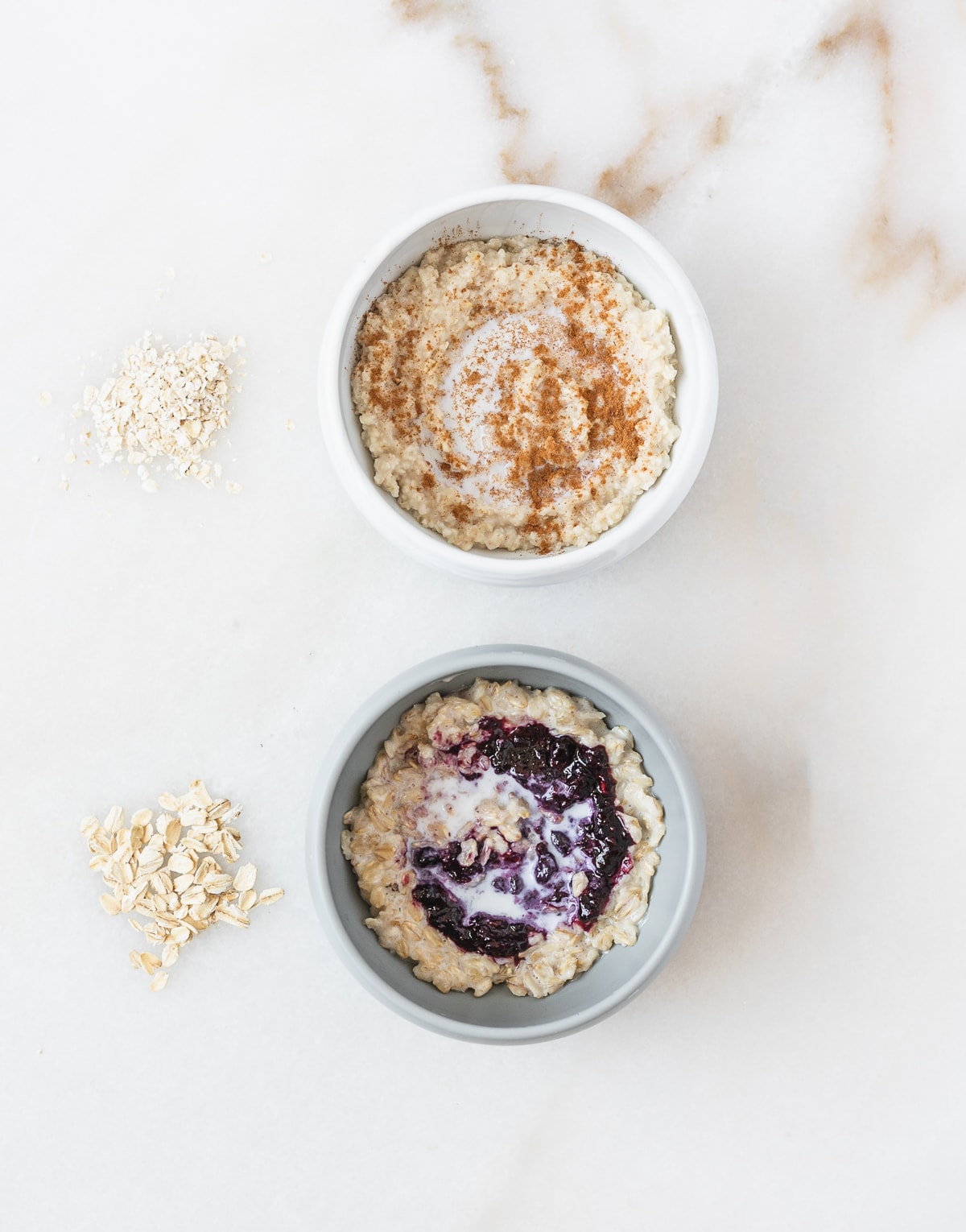
A simple and creamy oatmeal made with regular rolled oats or quick oats. Easy to adjust for different textures and perfect for babies starting solids.
Regular oats can be turned into a soft and creamy first breakfast in just a few minutes. Adjust the amount of liquid to create a smoother or thicker texture depending on your baby's eating skills.
Why You’ll Love This
- Suitable from around 6 months.
- Ready in just a few minutes.
- Made with regular oats.
- No added sugar.
- Easy to adjust the texture.
- Works for spoon-feeding or self-feeding.
Ingredients
Stovetop Method
- ½ cup water or milk (120 mL)
- ¼ cup rolled oats or quick oats (20 g)
Quick Hot Water Method
- ¼ cup quick or instant oats (20 g)
- ⅓ cup water or milk (80 mL)
Metric conversions may vary slightly depending on the brand.
Breast milk can also be used to adjust the consistency after cooking.
Stovetop Instructions
- Add the water or milk to a small saucepan and bring to a gentle simmer.
- Stir in the oats.
- Cook over low to medium heat, stirring occasionally, until the oats are very soft and have absorbed most of the liquid.
- Quick oats usually take about 1–3 minutes, while rolled oats may take around 3–5 minutes.
- Add more liquid if needed to create a softer, creamier texture.
- Allow the oatmeal to cool to a safe temperature before serving.
Quick Hot Water Method
- Add the quick or instant oats to a heat-safe bowl.
- Heat the water or milk until very hot.
- Pour the hot liquid over the oats.
- Cover the bowl and allow the oats to sit for about 3–5 minutes.
- Stir well once the oats have absorbed the liquid.
- Thin with additional liquid if needed and allow to cool before serving.
Baby Serving Note
Oatmeal can be offered from around 6 months once your baby is showing signs of readiness for solid foods. For new eaters, make the oatmeal soft and creamy and offer it on a spoon or preloaded spoon.
Texture by Stage
- 6+ months: Use quick oats or blend rolled oats before cooking for a smoother consistency. Thin with extra liquid as needed.
- 8–9+ months: Gradually leave more texture by using regular rolled oats without blending.
- Older babies: Cook the oatmeal slightly thicker or allow fully cooled oatmeal to become firm enough for supervised self-feeding.
Baby-Friendly Tips
- Temperature: Oatmeal can stay very hot in the center. Stir well and check the temperature before serving.
- Texture: Add extra water, milk, or breast milk if the oatmeal becomes too thick for your baby.
- No added sugar: There is no need to add sugar, honey, or syrup to baby oatmeal.
- Milk: Cow's milk can be used as a recipe ingredient before 12 months, but it should not replace breast milk or infant formula as the baby's main milk drink.
- Breast milk: If using breast milk, it can be stirred into the cooked oatmeal to thin the consistency once the oatmeal has cooled slightly.
Easy Mix-In Ideas
- Mashed banana
- Apple or pear purée
- Mango purée
- Mashed berries
- Plain yogurt
- Thinly mixed smooth peanut or nut butter, if appropriate
- Ground cinnamon
Storage
- Fridge: Store leftover cooked oatmeal in a clean airtight container in the refrigerator.
- To serve: Reheat thoroughly, stir well, and add extra liquid as needed to restore a creamy consistency.
- Self-feeding: Fully cooled thicker oatmeal made with rolled oats can also be shaped into soft portions for babies who are comfortable self-feeding.
Nutrition Information
View estimated nutritional values
Estimated for one complete preparation (1 serving, using either method with water)
Calories: ~76 kcal | Carbohydrates: ~13.5 g | Protein: ~2.6 g | Fat: ~1.3 g | Fiber: ~2 g | Sugar: ~0.2 g | Vitamin A: ~0 µg RAE | Vitamin C: ~0 mg | Calcium: ~10 mg | Iron: ~0.9 mg
These estimates are for one serving made with a single method, not for both methods combined. Each method uses ¼ cup (approximately 20 g) of plain, unfortified dry oats.
The stovetop method uses ½ cup (120 mL) water, while the quick hot water method uses ⅓ cup (80 mL) water. Water adds no calories or measurable nutrients. Nutritional values are estimated using plain dry oats; rolled, quick, and instant oats may differ by product.
Using milk instead of water changes the nutritional values, particularly calories, protein, fat, calcium, and vitamins. The type of milk is not specified, so a milk-based total cannot be calculated reliably.
Added breast milk, extra liquid other than water, and optional mix-ins are excluded because their quantities are not specified. Fortified instant oats may contain substantially more iron and vitamins, while flavored varieties may contain added sugar. Actual values depend on the product used.